
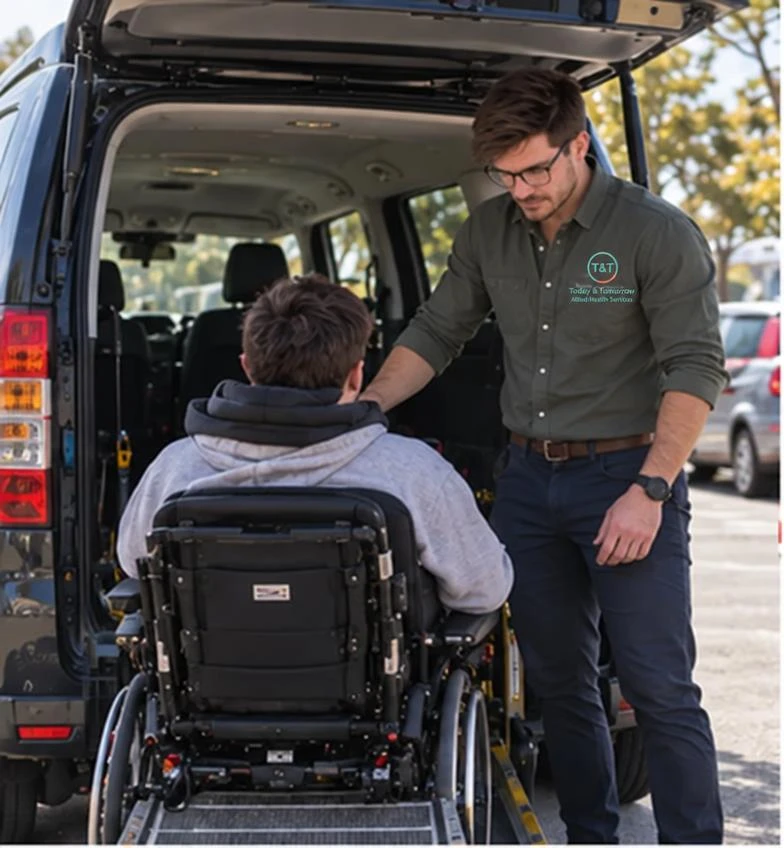
Access, transport & carer safety
Vehicle Accessibility Modifications
Getting in, out and travelling safely is a clinical question before it's an engineering one. I assess the person, the wheelchair and the vehicle — then prescribe the modification that actually matches all three.
Swivel seats, hoists, ramps and platform lifts
Wheelchair tie-downs and occupant restraints
Carer-safe loading options
Clinical reports with NDIS justification
What to expect
Clear evidence, grounded in daily life
01
Access and transport — not driving controls
Vehicle modification work splits into two areas. Driving modifications — hand controls, steering adaptations, left-foot accelerators — belong to specialist driver-trained occupational therapists, and I'll happily point you toward one.
My work is the other half: access and transport. How you get into and out of the vehicle, how the wheelchair is loaded and secured, how you travel safely as a passenger, and how much strain falls on the person doing the lifting.
02
What the assessment covers
A vehicle access assessment measures the person, the wheelchair and the vehicle together. Can you transfer into a standard seat with a swivel base, or do you need to travel in your chair? If in the chair, does the vehicle need a ramp, a hoist or a lowered-floor conversion? What tie-down and restraint system keeps you safe and legal?
Getting this wrong is expensive — a hoist prescribed for the wrong vehicle, or a chair that doesn't fit the converted van, can mean tens of thousands of dollars of unusable modification. The assessment exists to prevent exactly that.
- Person and wheelchair measurements, weight and transfer ability
- Current and planned vehicle suitability — door openings, internal height, boot space
- Hoists, ramps, lifts and swivel or transfer seat options
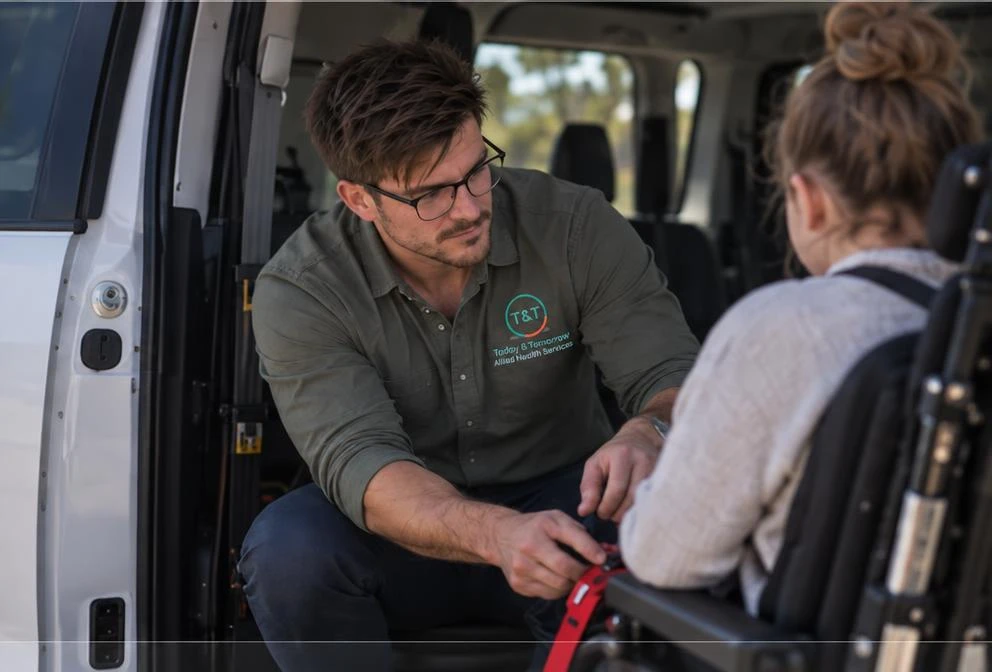
- Wheelchair tie-downs and occupant restraints for travelling seated in the chair
- Carer safety — the daily lifting and loading load on family members
03
Working with vehicle modifiers
I work alongside reputable vehicle modification businesses from assessment through to fit-off — so the clinical prescription and the engineering line up. The report specifies what's needed; the modifier builds it; and I check the finished setup actually works for you before sign-off.
04
Vehicle assessments across Queensland
Vehicle assessments need to see the actual vehicle, so they're completed in person across the Gold Coast (postcodes 4209–4226), Brisbane (4000–4179), Logan (4114–4207), the Scenic Rim and the Northern Rivers, and during regular regional visits to Adelaide, the Riverland and Mackay. Planning conversations and report discussions work well by Telehealth.
Assessment in practice
Equipment and access assessed in the real world


Transparent pricing
Vehicle modification assessment pricing
Vehicle Accessibility Assessment
Charged at the current NDIS OT hourly rate of $193.99, based on the complexity of the modification and the reporting required — always quoted in writing before work begins.
Scoped individually
- Charged at the current NDIS price limit for occupational therapy of $193.99 per hour.
- Covers person, wheelchair and vehicle measurement, options analysis, the clinical report and liaison with the vehicle modifier.
- Self-managed and plan-managed NDIS participants, plus private paying clients, accepted.
How to book
Send the referral form, we confirm the fee and funding in writing, then we schedule the assessment. Most referrals are confirmed within two business days.
Useful references
- NDIS: Assistive technology explained
How the NDIS considers and funds assistive technology, including vehicle modifications.
- NDIS: Pricing arrangements and price limits
Maximum hourly rates for occupational therapy assessment and report writing.
- Occupational Therapy Australia
Professional standards for occupational therapy practice in Australia.
Ready to discuss an assessment?
Send the referral details and we will confirm fit, expected hours and the next available appointment.
Make a referral