
NDIS funding and planning
Autism and Functional Capacity Assessments
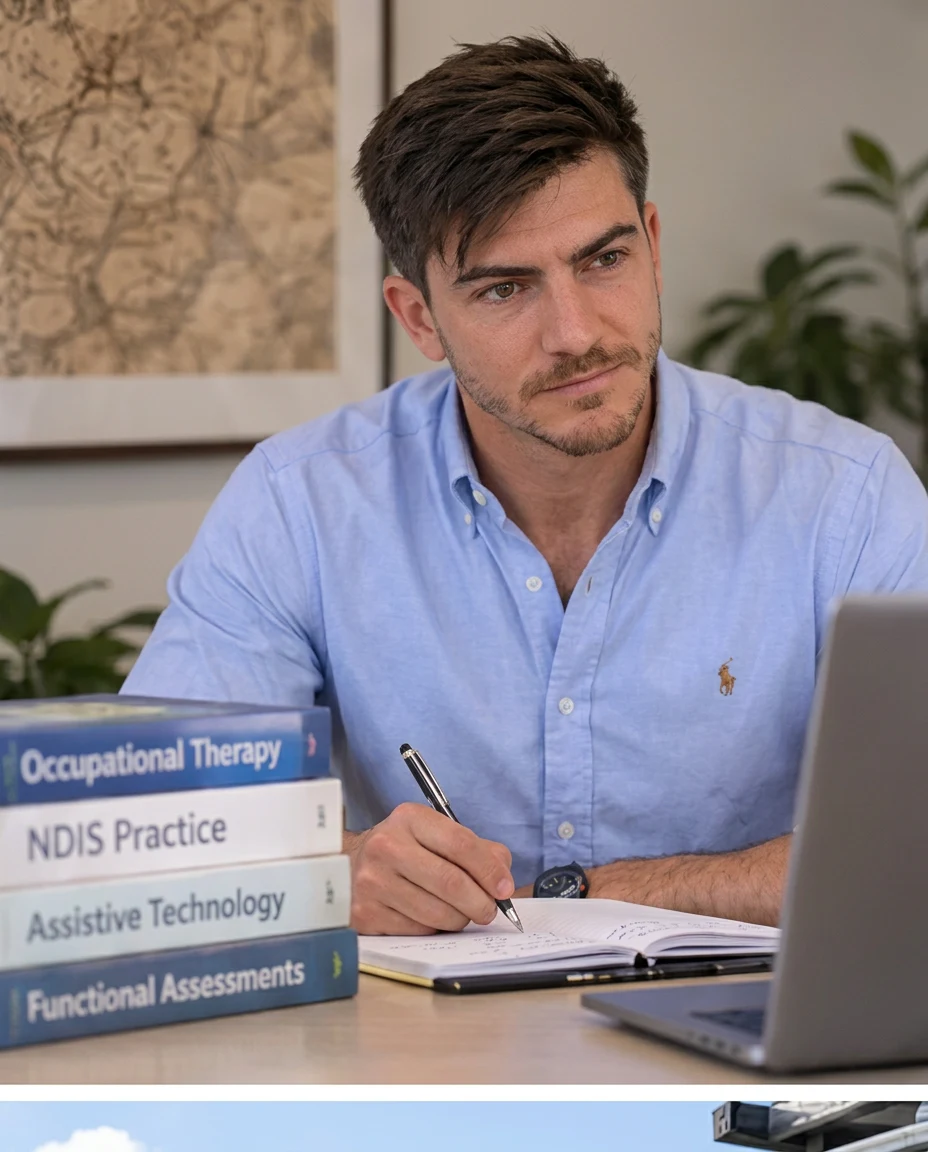
An autism-informed functional assessment should recognise strengths, communication preferences, sensory needs and the support behind everyday participation.
Understanding function without reducing someone to a diagnosis
An autism diagnosis does not describe everything about a person's daily life. A functional capacity assessment explores how an individual participates in activities, what matters to them, what support they use and which environments help or hinder participation. Autistic people have different strengths, preferences and assistance needs; an assessment should make those differences visible.
Australia's national autism assessment and diagnosis guideline provides a framework for appropriately qualified practitioners. A functional assessment has a different purpose from determining whether someone meets diagnostic criteria: it examines everyday functioning and support needs. Existing diagnostic information may contribute, but should not replace the person's own account.
Agreeing on purpose, consent and communication
The clinician should explain why the assessment is being requested, what it involves, who will receive information and what choices are available. Consent should be revisited when the plan changes, such as adding an observation or contacting another professional. Communication differences should not automatically be treated as an inability to participate in decisions.
Ask how you prefer to communicate. Options may include speaking, typing, written questions, augmentative and alternative communication, or a combination. Processing time, a predictable agenda and a chosen supporter may help. For children, assessment should involve parents or caregivers appropriately while also seeking the child's views and assent in ways they can access.
Language preferences also matter. This article uses identity-first language, but individuals may prefer different wording. A respectful assessment asks rather than assumes. Autism CRC's guidance on supporting autistic children explicitly considers community language preferences; its recommendations are child-focused and should not be presented as an adult treatment guideline.
Making the assessment environment accessible
Discuss sensory and practical needs before the appointment. Lighting, background noise, waiting arrangements, unfamiliar people and unexpected changes can affect participation. Helpful accommodations may include a quieter setting, reduced sensory input, movement breaks, advance information or a familiar communication method. Not everyone needs the same arrangements.
An assessment should not require forced eye contact or the suppression of harmless self-regulation to demonstrate cooperation. If distress develops, the clinician should consider pausing, changing the approach or rescheduling. Observation should be purposeful and consented to, not an endurance exercise.
Standardised tools have administration requirements. Where an accommodation changes those requirements, the report should explain the change and any limits on score interpretation. Accessible participation and transparent reporting can coexist; a number without that context may be misleading.
Exploring ordinary life across settings
Depending on age and goals, assessment may consider personal care, meals, managing routines, learning, relationships, work, education and community participation. The occupational therapist should ask what activities the person values, not assume that the goal is appearing non-autistic or following a conventional routine.
Function can vary between familiar and unfamiliar settings, predictable and changing tasks, or low-demand and busy environments. Someone may communicate effectively in one situation and need substantial support in another. Coping visibly during an appointment does not reveal the effort involved or what happens afterwards. Ask about recovery needs and activities that were reduced to make attendance possible.
Strengths should be specific and useful: effective routines, interests, problem-solving approaches, communication skills and supportive relationships. The report should also describe support already operating in the background. A task completed with preparation, prompting or another person's organisation is not evidence that those supports can simply be removed.
Building evidence from more than one source
A robust assessment triangulates the person's account, relevant observations, suitable measures and existing information. With consent, contributions from family, educators or support workers may clarify different environments. These accounts should be identified rather than blended into a single supposedly objective story.
Measures must be selected for their purpose, age range and limitations. An adaptive functioning questionnaire may contribute information about everyday activities, while another measure may explore broader participation. No single instrument captures the whole person. WHODAS 2.0 is not a universally mandatory NDIS test, and an autism diagnosis or assessment score does not calculate a funding allocation.
NDIS guidance describes functional capacity assessments as evidence about daily tasks and support needs. Recommendations should connect the observed difficulty, environmental barriers and proposed assistance, while acknowledging uncertainty. Where information conflicts, the report should explain possible reasons and identify what further clarification would help.
Preparing in a manageable way
Ask for an outline of the appointment, likely participants and any planned questionnaires. Share communication and sensory preferences in advance. Bring relevant existing reports if available, and check what is actually needed before arranging more testing. Ask how private or sensitive information will be handled.
Short notes can describe activities that work well, tasks needing support and differences between settings. Include assistance from family or friends, strategies already tried and recovery after demanding activities. Written or recorded contributions may be useful if discussing everything live is difficult. You do not need to create a crisis, withdraw effective support or demonstrate distress to provide meaningful evidence.
Two frequently asked questions
Can someone need substantial support despite speaking fluently? Yes. Fluent speech does not establish independent self-management, sensory tolerance or sustainable participation. Assessment should explore the relevant activities directly and consider the support required across settings.
Will the report guarantee NDIS access or particular supports? No. A functional report can describe needs and make reasoned recommendations, but the NDIA makes decisions under the applicable requirements. Neither a diagnostic label nor a particular questionnaire result guarantees a funding outcome.
Asking about an autism-informed assessment
To discuss daily functioning or disability-related support needs, contact Today & Tomorrow Allied Health Services to discuss an appropriate assessment. Confirm the scope, suitability, fees and availability before proceeding. Funding decisions and plan permissions should be clarified with the NDIA; an assessment does not guarantee funding.
This article is general information, not an individual assessment or diagnostic opinion.
Official sources
- Autism CRC — National Guideline for the assessment and diagnosis of autism in Australia
- Autism CRC — Supporting Autistic Children Guideline: reading the guideline
- NDIS — What is a functional capacity assessment
This article provides general information only. NDIS rules and individual circumstances can change; check current official guidance or seek advice about your situation.